

Though a cognate for what comes out of a bright yellow squeeze bottle, this relish has very little in common with that Easter egg-colored condiment. Mostarda is a chunky agrodolce (sour-sweet) sauce made with whatever fruit you have on hand and is a delicious topping for everything from cheese to roasted meats.
Inspired by this passage in Crystal King's The Chef's Secret*, I added two different mostarde to our Ab Ovo Usque Ad Mala Thanksgiving menu. "'The mostarda you probably know is made with all sorts of fruits, such as figs, raisins, and pears, but in Venezia the mostarda is made with quince, which you can't always find in Roma. Bartolomeo would always lament how much better the mostarda was in Venezia'" (pg. 153).

I served the two different mostarde with three different game sausages. This quince-apple mostarda went nicely with the duck and the boar sausages while my cranberry-orange mostarda complemented the venison sausages really well.

Oh, and if you aren't familiar with quince, it has a very short season here. They are golden-hued till you cook them. Then they take on unique shades of pink, orange, and rose. They are beautiful and I love them. Many people have commented that they don't know what a quince is or they haven't ever had a quince. If you're unfamiliar, here's a piece I wrote for Edible Monterey Bay back in 2014: Queen of Quince Takes Her Show on the Road. Whenever I can get my hands on the fruit, I scoop them up.
Ingredients
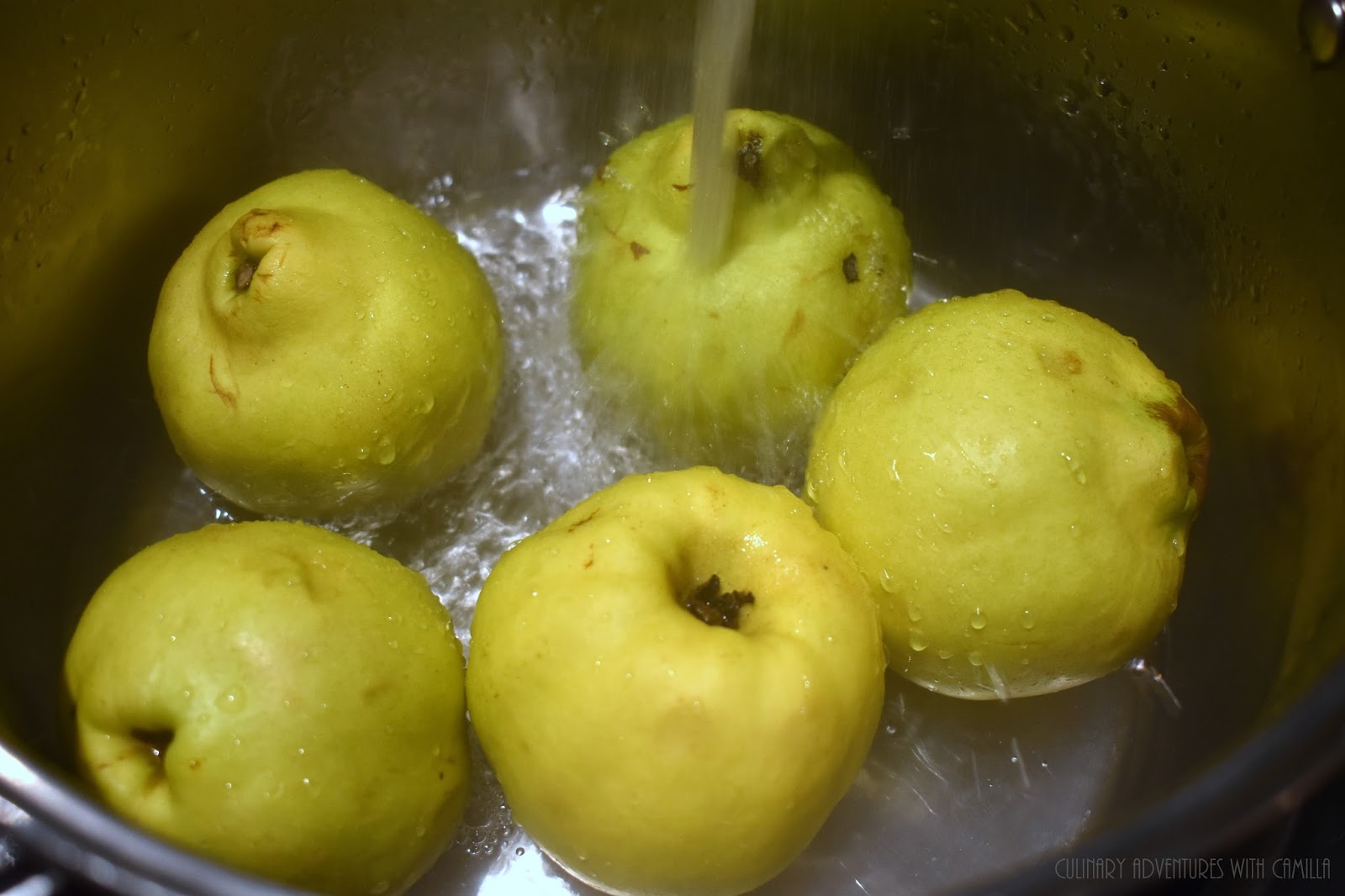
- 2 to 3 quince (I used the other ones for something else, after they were poached)
- 1 small onion, peeled and diced (approximately 1 C)
- 2 to 3 small apples, diced (approximately 1-1/2 C)
- 2 T raw organic honey
- 1/4 C vinegar (I used apple cider vinegar)
- 1/4 C water
- 1 T black mustard seeds
- sea salt to taste
Procedure

Rinse the quince and place them in a large pot. Cover with water and bring to a boil. Simmer uncovered for 75 to 90 minutes until the quince is tender. The fruit will turn golden; the longer you poach it, the more pinkish it becomes.

'
Slice drained, poached quince in half. Remove the cores, stems, and peels. Cut into cubes.
Place all of the ingredients in a heavy-bottom pan. Simmer for 50-60 minutes, until the onions are translucent and the sauce syrupy. To finish, season to taste with salt. This keeps in the fridge for two weeks or so.

*This blog currently has a partnership with Amazon.com in their affiliate program, which gives me a small percentage of sales if you buy a product through a link on my blog. It doesn't cost you anything more. If you are uncomfortable with this, feel free to go directly to Amazon.com and search for the item of your choice.
Comments
Post a Comment