Homemade Vanilla Bean Extract


Near the beginning of our shelter-in-place orders, a friend posed the question on social media: "So, vanilla is the new toilet paper?!? Why is this flying off the shelves AND ridiculously overpriced?"

I decided to make my own since I had a bunch of vanilla beans from a previous project or event. And when it was finished, I delivered a bottle to my friend.

Homemade vanilla extract only requires two ingredients: vanilla beans and vodka. Oh, and a lot of patience. This batch infused for four months, but the longer you let it steep, the better. I did a batch previously that sat for eight months. I have read that you can begin to use it after as little as 8 weeks, but it didn't have that deep mahogany color that I like nor the heady scent of vanilla.

Ingredients makes approximately 750 ml,
but the rule of thumb is 5 to 6 vanilla beans per 250 ml vodka. So adjust as needed.

  • 15 to 18 vanilla beans
  • 750 ml vodka
  • jar with a tight seal

Procedure

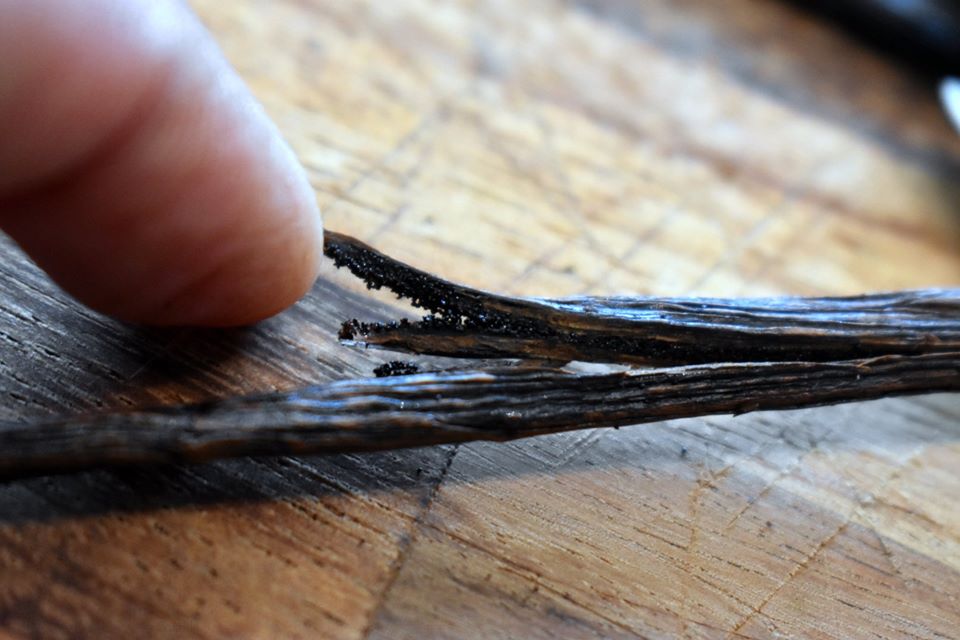
Using a sharp paring knife, slit the vanilla beans so the 'caviar' are exposed. You don't need to slice through the bean, just make a slit down the middle.

Place beans into the jar.

Pour vodka over the bean until the beans are fully submerged. You can press the beans down into the liquid as needed.

Then keep the vanilla at room temperature and out of direct sunlight. Shake the contents about once a week, pressing the beans down into the liquid if they pop up. If they are exposed to the air, they will get slimy.

That's it! You can keep your vanilla in the large jar or bottle them into smaller jars for gifting to friends. Also, you can keep refilling your bean jar until the liquid begins to lose its aroma. I, myself, have only used beans for two full batches...but give it a shot and let me know.

Comments

Popular posts from this blog

Hot Chocolate Agasajo-Style {Spice It Up!}

photo by D For my Spice It Up! kiddos this week, I was looking for an exotic drink to serve while we learned about saffron. I found a recipe from food historian Maricel Presilla that mimicked traditional Spanish hot chocolate from the 17th century where it was served at lavish receptions called agasajos . When I teach, I don't always get to shoot photos. Thankfully, D grabbed my camera and snapped a few. Ingredients serves 14-16 1 gallon organic whole milk 3 T dried rosebuds - or 2 t rosewater 2 t saffron threads, lightly crushed 3 T ground cinnamon 3 whole tepin chiles, crushed 2 vanilla beans, split lengthwise 1 C organic granulated sugar 1 lb. bittersweet chocolate Procedure In a large soup pot that can hold a gallon plus, combine milk, dried rosebuds (or rosewater, if you are using that), saffron threads, ground cinnamon, chiles, vanilla beans, and sugar and warm over medium heat till it steams. Whisk to dissolve sugar, then lower heat an...

Ki Ngombo = Okra

In honor of Mardi Gras, I searched for traditional recipes for gumbo...only to discover that there is no canonical recipe for gumbo. It seems there are as many recipes for gumbo as there are cooks!  The only two constants in a gumbo: variety and okra. The term 'gumbo' likely comes from an African dialect whose word for okra is ki ngombo .  Gumbos can have meat, seafood, just about anything.  In Mark Huntsman's "The History of Gumbo" he refers to written mentions of using muskrat and owl in gumbo recipes.  I embraced the unlimited potential of ingredients and opted for a combination of fish, chicken, pancetta, oysters, mussels, octopus, shrimp, and squid...and lots of okra!

A Cheese Board Anchored on a Trio of Italian Cheeses + A Pinot Nero from Alto Adige #ItalianFWT on CulinaryCam.Com

I am in the process of migrating over to my new domain. Come on over to read " A Cheese Board Anchored on a Trio of Italian Cheeses + A Pinot Nero from Alto Adige " for December's #ItalianFWT.